"Cloning Mishaps"
In this clever piece of short fiction, Mina Hayward describes a work hack that comes with a unique set of complications.

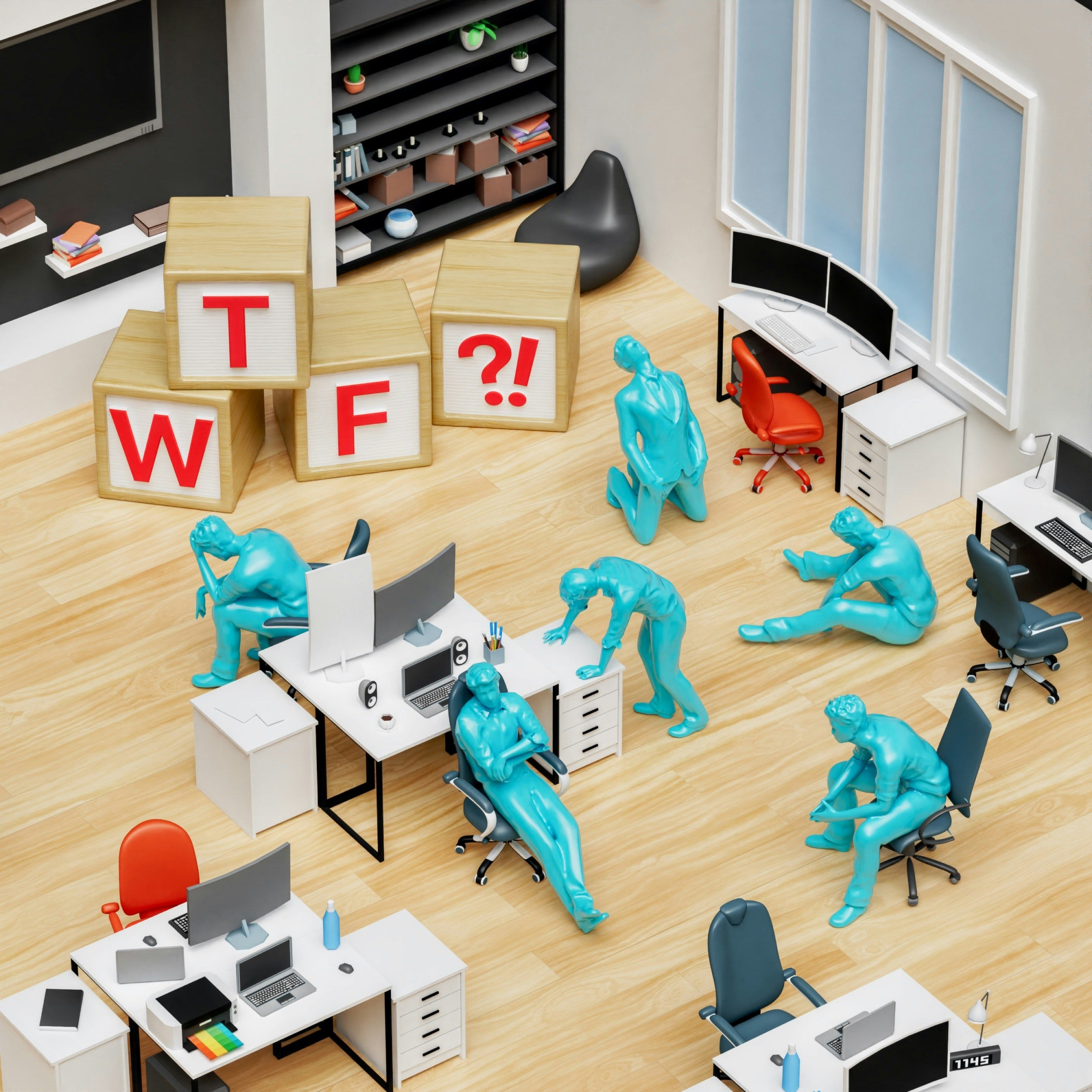
Two barriers prevent me from actually going to work: my office being two blocks away and my clones.
Honestly, I thought it’d be easier to automate the whole “going to work” business—just get someone to do your job for you, and if they look and sound like you, your manager probably won’t notice.
But what no one told me is that cloning’s actually a lot more like yoghurt than spreadsheets. Given enough clones, they will eventually develop their own ecosystem, demanding rights and even marriage. That is weird, right? I mean, as a job centre call operator, I hear a lot of shit, but this takes the cake. I was even invited to the wedding.
When I sat in my office a year ago, did I think I’d have fifty clones and a pair would be marrying each other? No, probably not. I had been shivering in my seat, taking my twenty-fifth call of the night. The air conditioning had been broken for days, and others along my row had long clocked out, but my caller wouldn’t stop talking. His latest talking point was some advert he’d seen at a bus stop.
I peered over the monitors to a window overlooking the street. It was busy. Friends queueing for restaurants, laughing mutely, huddled tight against the wind. I imagined being there with them.
“—Cloning packages.”
“What?” I said. The office’s energy-saving lightbulbs fuzzed my vision.
“Cloning package,” he repeated, syllable by syllable.
“Okay,” I said. I thought to the leftovers in my fridge. Pasta I overcooked a week ago. Was that still good to eat? “Let’s set that aside for a minute. Tell me about your job search. How about—“
I leant back in my seat and told him something I saw while leafing through one of those free train magazines. Back then, I’d liked to spend a day on the station platform and imagine going somewhere, the rush of wind as the carriage sailed across the hills and fields. Its passengers, strangers, united only by their destinations, together for one brief and glorious hour. The careful intimacy of it.
“It’ll be perfect for you,” I said, “landscaping. Once qualified, you’ll have full control over which projects to take on.” I closed my eyes, savouring the details. “Also, here’s the kicker, there’s a great professional community.”
My caller paused over the line.
“I think I’m going to get a clone,” he said.
“Okay,” I said.
“Why did you keep me so late?” he asked. “Don’t you have anything to do? Friends or something?”
That evening, I had a nightmare where my manager fired me for not meeting targets because one hundred identical clones counted only as a single caller.
I woke up in a cold sweat and was late to work the next day. My manager, real, gave me a written warning. When I got home, I booted up my old laptop and typed cloning packages into the search bar.
It had been alright at first, just me and my Two. I got a few wonderful days of bed rest while Two went to work, until he started having the same sort of mental breakdowns I had. It turns out, my clone is a copy of me. Who’d have guessed?
We talked, then we got number three. I should’ve stopped there, honestly.
The very first call a clone took seemed to determine how willing they were to go to work. I guess it’s like how children are more impressionable in the first few years of childhood.

In the end, only two out of my fifty clones got into the groove of working. The rest of them went on strike.
You know the job’s rough when ten people with your own face start crowding around you and saying stuff like, “This is an intervention”, “you should maybe find another job”, “or some friends”, “and maybe fix that sleep schedule.”
As I said, out of them, only Ten and Eleven are actually good at their—my—job. Ten had been so good, he secretly applied for a higher paid position and moved away. He still sends me letters sometimes. I don’t read them. I bet he gloats because I would if I were him—which I am and he is.
Eleven and I do a 50/50 job-share. He told me it was because I “need to get out of bed sometimes.” In fact, all my clones kept wanting to talk to me about things.
“They’re just worried about you,” Eleven says.
“I don’t know,” I say, “it sounds like they’re making excuses for not working.”
In fact, they had started a small-scale economy between themselves. Five got into forging IDs, and Twelve managed schedules so no two clones would be at the same location at once.
They charged for their services.
“I got an ID,” Eleven says, “look.”
He shows me. My face is half-obscured by a glare on the laminated card.
For a superficial moment of delight, I wonder if I could get one, escape to a new country, and start a new life.
Eleven, being my clone with my brain, says, “You can’t fool border guards with it. It’s not like any of us—or you—can make something like that.”
It’s like having schizophrenia, but all my voices are real and sarcastic.
“Why do you have it then?” I ask.
“To drink at bars.”
“That’s it?”
He shrugs. “So when we commit crimes, we’ll always have an alibi at the bar.”
I gape at him.
“I’m messing with you,” he laughs. My laugh. “We’re risk averse because you are. I’m surprised you had the guts to clone yourself.”
“Work does things to you,” I say.
“Come drink with us,” he continues. “Some of us are going out tonight.”
I had been worried about forty-nine identical people congregating, but there are only twenty of us, with the rest of me made up in colourful costumes as if it was Halloween. From the outside, this is just a group of friends having fun, who wouldn’t be envious?
When Eleven tugs me into the crowd, I flinch, but my clones take my arms warmly. The bar beyond fades with the perfusion of colours. They press in, a collar, a sleeve, costumes fluttering across my view like desert mirages.
So happy you could join us, they say, and I laugh, my voice pitched too high. I think maybe, by some miracle, they do actually like me a little.
Someone—Fifteen—grins at me. “You’ll rob a bank if we ask, right?”
“Yes, anything,” I say, and that’s probably the truth.